
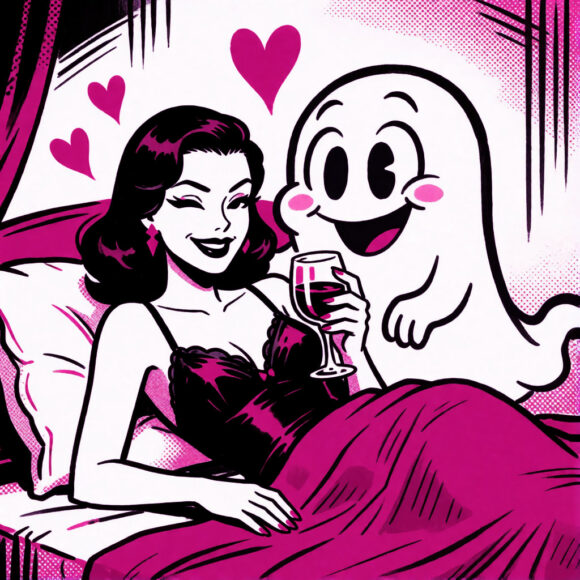
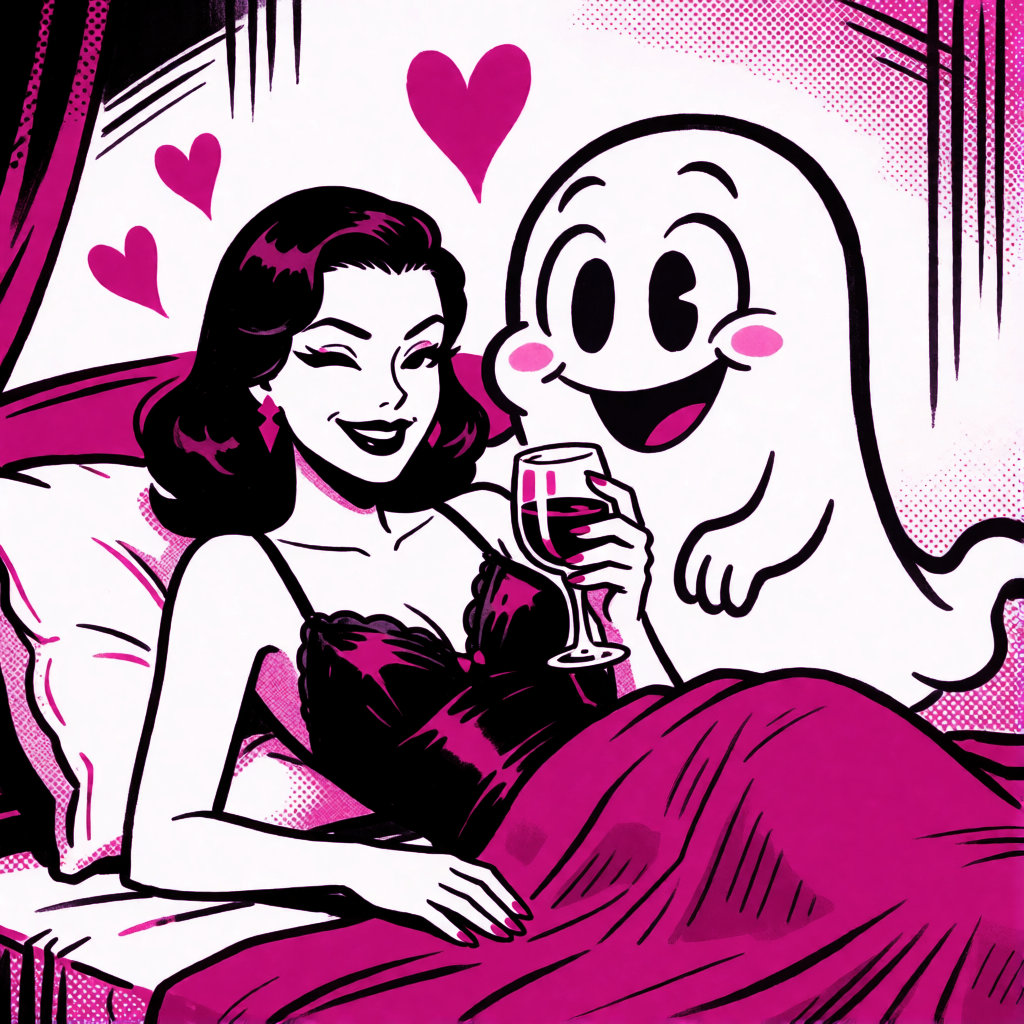
In bed, the dream partner doesn’t snore, doesn’t steal the duvet and doesn’t leave his socks lying around. Push perfection one notch further and you get a presence that walks through walls to join you in your bedroom: welcome to spectrophilia, sexual attraction to ghosts.
For Halloween, we had already explored skeleton dildos, insect sex toys and erotic books peopled with fantasy creatures. This time, we are turning our attention to lovers from beyond. The fantasy very much exists, and tales of supernatural sex are nothing new.
Between Californian parapsychology cases, medieval demons and sleep paralysis, this article risks unsettling your October evenings.
The word “spectrophilia” really exists
Spectrophilia refers to the sexual attraction to spirits. The term has also been used to describe arousal triggered by images in mirrors, enough to fuel a few scenarios in front of the looking glass.
Far from being an invention of the Internet, the word even has its own entry in “Ghosts in Popular Culture and Legend”, an encyclopaedia devoted to ghosts, published in 2016. Spectrophilia can refer just as well to the fantasy of a spectral partner as to the sexual experiences some people claim to have lived with a spirit.
In the first case, we stay on the side of play and imagination. In the second, science has much less mysterious explanations to offer. But we will come back to that a little later.
The ghost, a fantasy as old as myth
Rest assured, you are not the first to find the idea exciting. Since Antiquity, tales of encounters between humans and spirits have run through every culture.
In the Odyssey, Odysseus tries three times to embrace the ghost of his mother, and three times his arms close on empty air, as on a dream. Nothing sexual here, but the ancient Greeks already knew that the ghost you love slips away at the very moment you want to touch it.
Even more unsettling: in Euripides, it is a spectral double that triggers the Trojan War. The gods replace Helen with an eidolon, an effigy made of clouds, and Paris spends years beside an illusion. One of the most famous love stories of Antiquity thus becomes a fable on being love-blind, in an almost literal sense.
In the Middle Ages, stories of carnal encounters with supernatural beings take a more sinister turn. The demon incubus (and his female counterpart, the succubus) visited sleepers to seduce them, sometimes by force. According to certain medieval theologians, these creatures could even be responsible for pregnancies. Centuries of testimonials describe a strangely similar scene: an overwhelming presence, paralysis on waking, sex endured.
European folklore also knew the Mare, a spirit that came to ride sleepers. That creature is partly where the word “nightmare” comes from, its second half deriving from an old verb meaning “to crush” or “to press”. In other words, when you say you had a nightmare, you are unknowingly summoning an old tale of a demon that climbs on top of you while you sleep.
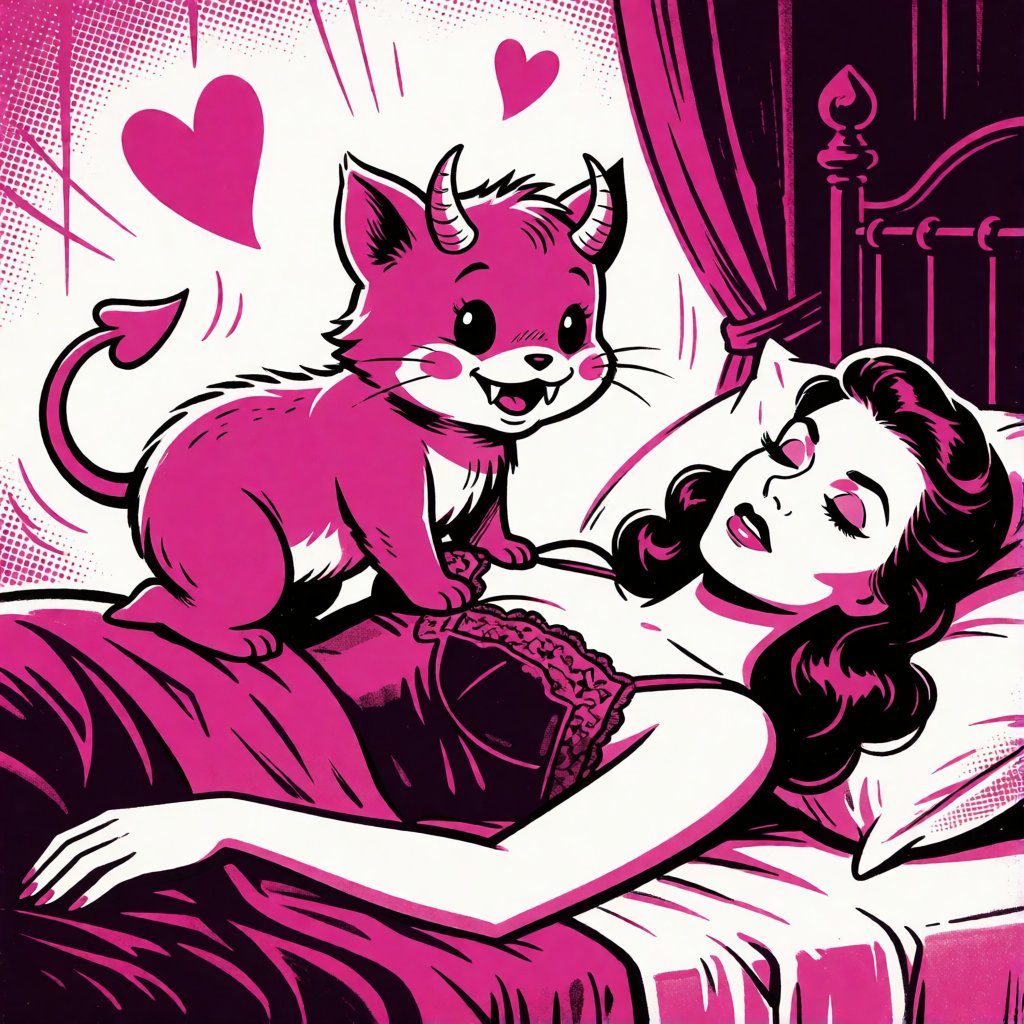
Spectral women, for their part, have no better reputation. In Slavic legends, the Wilis, brides who died before their weddings, drag men into a deadly dance, while the rusalki, ghosts of drowned women, draw them to the bottom of the water, when they are not tickling them to death.
In China, Pu Songling’s Liaozhai Zhiyi, composed from the 17th century onwards, sometimes grants lovers from beyond a better fate. In the story of Nie Xiaoqian, a beautiful revenant is forced to seduce men to hand them over to a demon. But Ning Caichen refuses her advances and offers her a new burial place to free her from her tormentor. Touched, she follows him home, and the two end up marrying. Proof that love stories with ghosts do not always end badly.
In Japan, the tale of Botan Dōrō tells how a widower, Ogiwara, receives every night the visit of a beautiful stranger, Otsuyu, who always leaves at dawn with her peony lantern. When a suspicious neighbour looks into this curious liaison, he discovers the horror: in bed, the beauty no longer appears as a woman, but as a skeleton. Warned of the danger, Ogiwara tries to resist her, but ends up returning to her arms. In the morning, he is found dead, embracing the bones of his beloved. Adapted for the stage notably in kabuki theatre, “The Peony Lantern” remains one of Japan’s most famous ghost stories. And it hides nothing of the carnal nature of the liaison.
Two recurring themes across the centuries and the continents: the spectral mistress or lover often exerts an irresistible attraction, and the story ends badly for the human. It is enough to make you wonder: why fantasise about a spirit you are afraid of? Perhaps because it concentrates the desire for a pleasure without judgement, without a morning after, without a body that ages… and at the same time the anxiety of losing all control.
The Doris Bither case: a spectral mystery
On from folklore to the parapsychology labs.
In 1974, in Culver City, California, a woman named Doris Bither claims to be attacked and raped by invisible entities in the run-down house where she lives with her four children. She meets Barry Taff, an investigator working with a parapsychology laboratory housed at UCLA (the University of California, Los Angeles). With his colleague Kerry Gaynor, he embarks on an investigation that will last ten weeks: repeated visits, measuring instruments, cameras.
The investigators report objects falling, nauseating odours, cold spots and floating lights in the bedroom. During one nocturnal session, Bither verbally provokes the entity to manifest itself while the photographers fire their cameras. On the snapshots, strange bands of light seem to surround her body.
The story goes around the world and inspires a book, then a cult horror film, The Entity (released in France as L’Emprise), starring Barbara Hershey.
But the photographs never constituted solid proof. Sceptics offer ordinary photographic explanations, notably artefacts linked to the way the shots were taken, and point to an investigation undermined by confirmation bias, against a backdrop of deep family distress. Barry Taff, for his part, always defended the reality of the phenomena he claimed to have observed. As for the sexual assaults reported by Doris Bither, the investigators were not witnesses to them.
A case with everything needed to send a shiver down your spine, but certainly not enough to conclude that a ghost slipped into this woman’s bed.
Marrying a ghost is possible (almost)
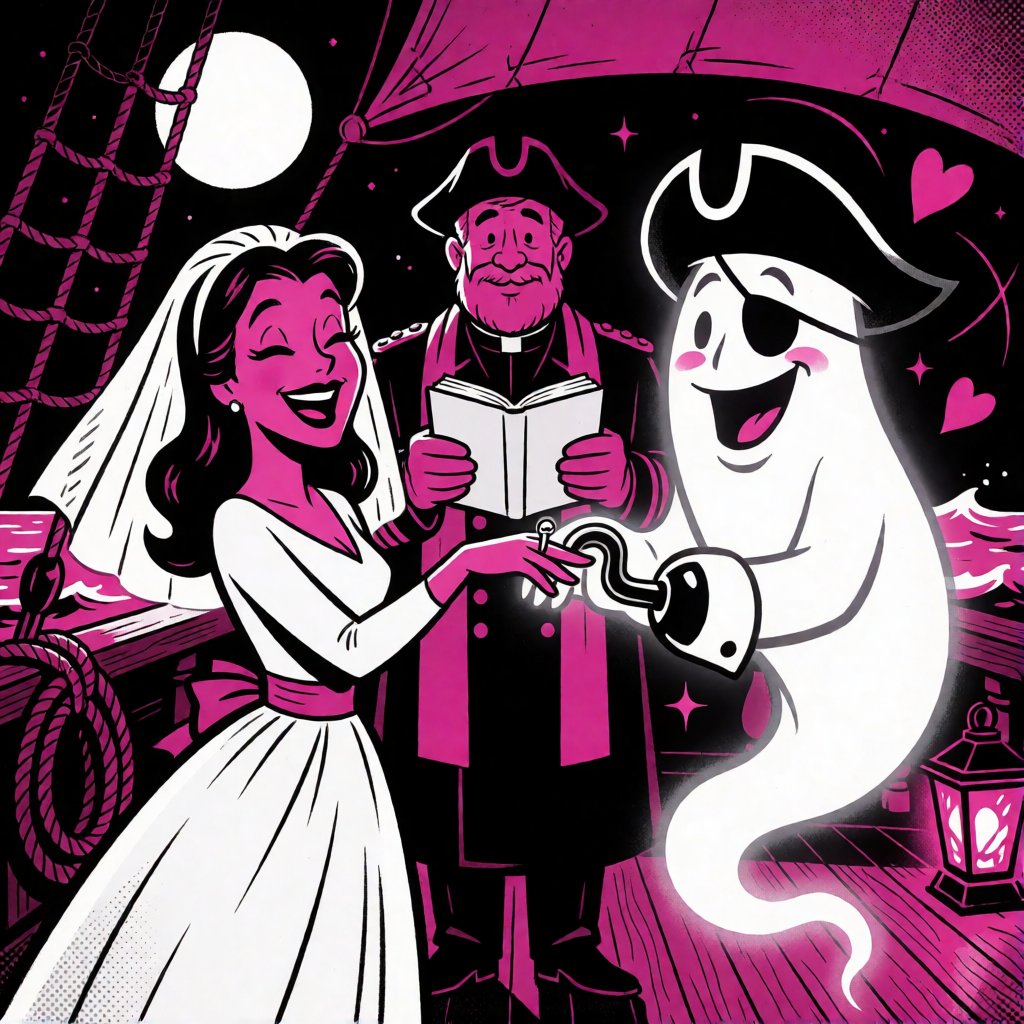
In 2016, a Northern Irishwoman, Amanda Teague, organised a ceremony on a boat in international waters to marry the ghost of a pirate from the 18th century named Jack Teague.
However, as the fact-checking site Snopes confirmed, this marriage had no legal value. The ceremony itself, though, was very real.
The couple have since separated. Even death, then, was not enough to guarantee eternal love.
Spectrophilia has a home on the forums
It would be comfortable to file all this away under folklore and the 1970s — except that, no.
Creepy Hollows, a major online community devoted to the paranormal and to spirit keeping, an esoteric practice built on the idea that one can form lasting bonds with spirits, even has a section dedicated to incubi, succubi and other sexual entities. There you will find plenty of accounts from people claiming to have had sex with spirits, somewhere between singular experiences and unusual beliefs.
I went and picked out a few tales.
For VelvetBlade, it all starts with semi-lucid dreams in which she meets a faceless lover with whom she feels a profound intimacy. But one night, she feels a penetration and a heat low in her belly, with startling realism. Her dreams then become more carnal, peopled with lovers of shifting appearance. Among them, a red dragon that sometimes takes on the features of her old karate teacher, and a white snake. Between intense pleasure and frightening episodes, she ends up wondering whether her night visitors might not be incubi.
The story of Zacx5 begins strangely: he recounts feeling a kind of arrow pierce his body through his left eye, before enduring three days of high fever. Then come the nocturnal caresses of an invisible hand and dreams in which a humanoid female entity makes him live through sexual intercourse of extraordinary intensity. But every morning, he wakes exhausted. Convinced that this succubus lives in his belly and feeds on his semen, he sets about weakening her with prayers. And yet he would like to keep meeting her from time to time, without the exhaustion or the unwanted contacts.
Seita, for his part, did not wait for a spirit to knock at his door: he paid to get in touch with a succubus. But after several weeks, not much to report, apart from a few tingles, buzzing in the ears, and a migraine. He then treats himself to a second ritual meant to strengthen their connection. Shortly after, he recounts feeling a breath on his face, then on his lips, up to the impression of a real kiss with tongue. He even claims to feel his mysterious companion’s fingers interlacing with his own. Proof that spectral love, too, would have its paid options.
Echofalls recounts an uncommon night out. In a particularly realistic dream, two incubi he considers his lovers take him to an underground nightclub, packed with creatures drinking, dancing and flirting under red lights. The only human of the evening, he lets himself be swept along by his companions, one of whom coils his tail around his waist. All three end up in a private room, but Echofalls prefers to keep the sequel to himself.
The story of EnglishMaster has all the feel of an ordinary romance, except that the chosen one of his heart has no body. This man, who has already known seven years of marriage, recounts exchanging kisses, declarations of love and sessions of what he calls “psychic sex” with a female spirit. His verdict is unequivocal: it is one of the best intimate experiences he has ever had. His only real problem is the jealousy of his spectral partner each time he welcomes a new spirit into the home.
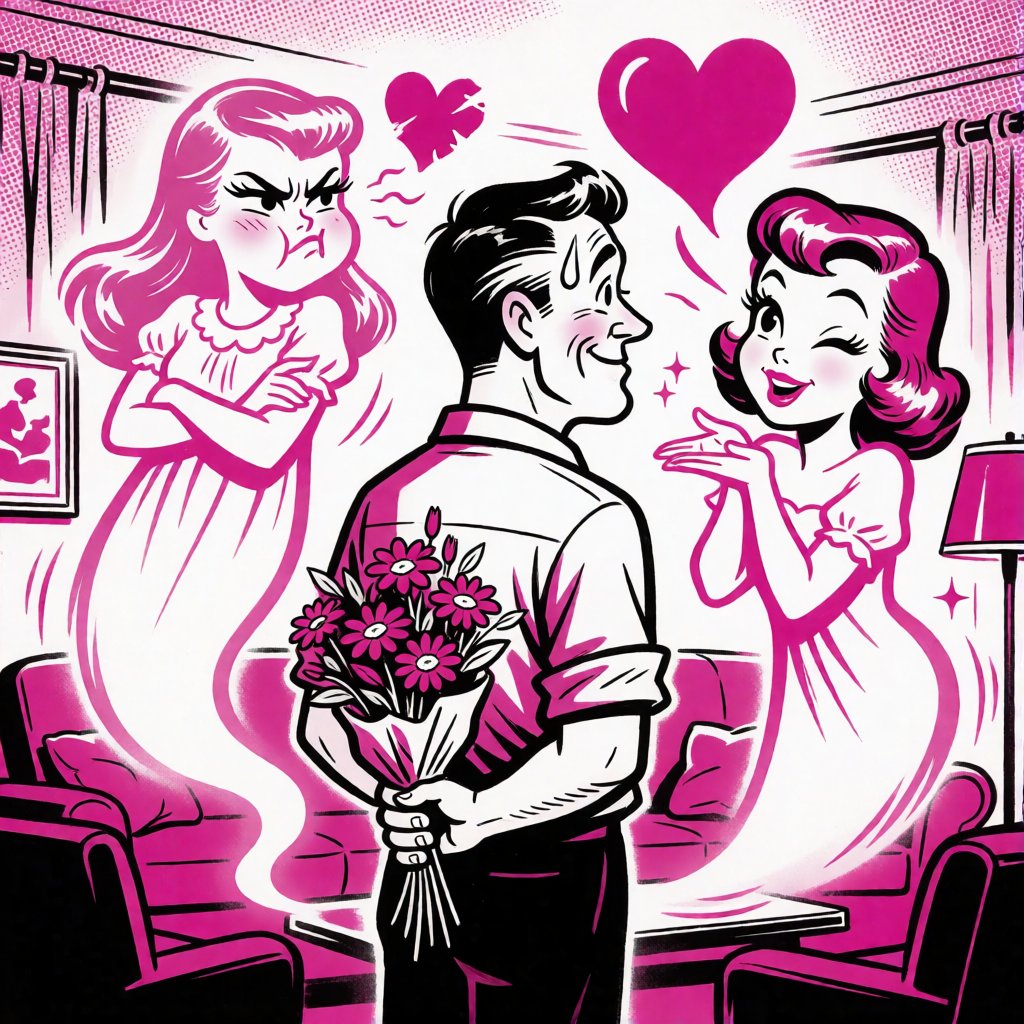
Behind these testimonials also hides a whole trade in supposed spirit matchmaking, billed from around ten dollars to more than 150 depending on the sites and the services, not counting additional rituals meant to strengthen the bonds. A market that raises questions, notably when it targets potentially vulnerable people.
Television has jumped on it too: the American channel Travel Channel aired a programme entitled “Ghostly Lovers”, devoted to people who claim to maintain relationships with the beyond.
In short, the ghost has traded its sheet for discussion forums and video platforms, but it has not aged a day.
The scientific interpretation
When you dig beneath the testimonials of carnal liaisons with the beyond, sleep medicine has a prime suspect ready made: sleep paralysis.
During REM sleep, the muscles are naturally paralysed, or almost. That is what stops your body from acting out the movements of your dreams. But it happens that consciousness returns before this muscular inhibition has disappeared. The sleeper wakes unable to move, sometimes with a sensation of weight on the chest, the impression that someone is standing in the room, or even highly realistic hallucinations.
And these hallucinations can be sexual. Sensations of caresses, of penetration, the impression of a body pressing against yours: the brain, still half submerged in the dream, can give these perceptions a startling reality. Especially since REM sleep also comes with perfectly ordinary physiological phenomena, such as nocturnal erections and genital lubrication.
This phenomenon is far from exceptional. A review of 35 studies published in 2011 estimated that around 7.6% of the general population had experienced at least one episode of sleep paralysis in their lifetime.
Sleep paralysis obviously does not explain all the tales, in particular those of people who say they are fully awake. But it reveals something fascinating: the brain, stuck between dream and reality, is capable of producing sensations that match the folklore descriptions to the letter.
It becomes easier to understand why incubi and spectral lovers have haunted bedrooms for so long. And why, before talking about ghosts, it can be useful to look at what happens under our own skulls.
The spectrophilia fantasy in pop culture
Spectrophilia did not escape the cinema, which has used it as much to send shivers down spines as to make hearts beat.
“The Entity” (“L’Emprise”, 1982) transposes the Bither case to the screen with Barbara Hershey, in a horror film that durably marked how attacks committed by an invisible entity are portrayed.
Long before it, “The Ghost and Mrs. Muir” (“L’Aventure de madame Muir”, 1947) explored the romantic version: a young widow moves into a cottage haunted by the ghost of a naval captain, and their relationship became one of the most famous love stories between a living woman and a dead man on screen.
As for “Ghost” (1990), not an ounce of horror, but proof that audiences are fond of romances from beyond the grave. Even murdered, Sam has lost none of his desire for Molly: he even finds a way to borrow a medium’s body to find her arms and her kisses again.
Horror and comedy have also had a field day with it. “Ghostbusters” (1984) even contains a scene surprisingly explicit for a mainstream comedy: in a dream sequence, Ray’s character finds his fly mysteriously opened by a female ghost who seems to be performing fellatio on him. The reference is clear enough to have been flagged by the British film classification board.
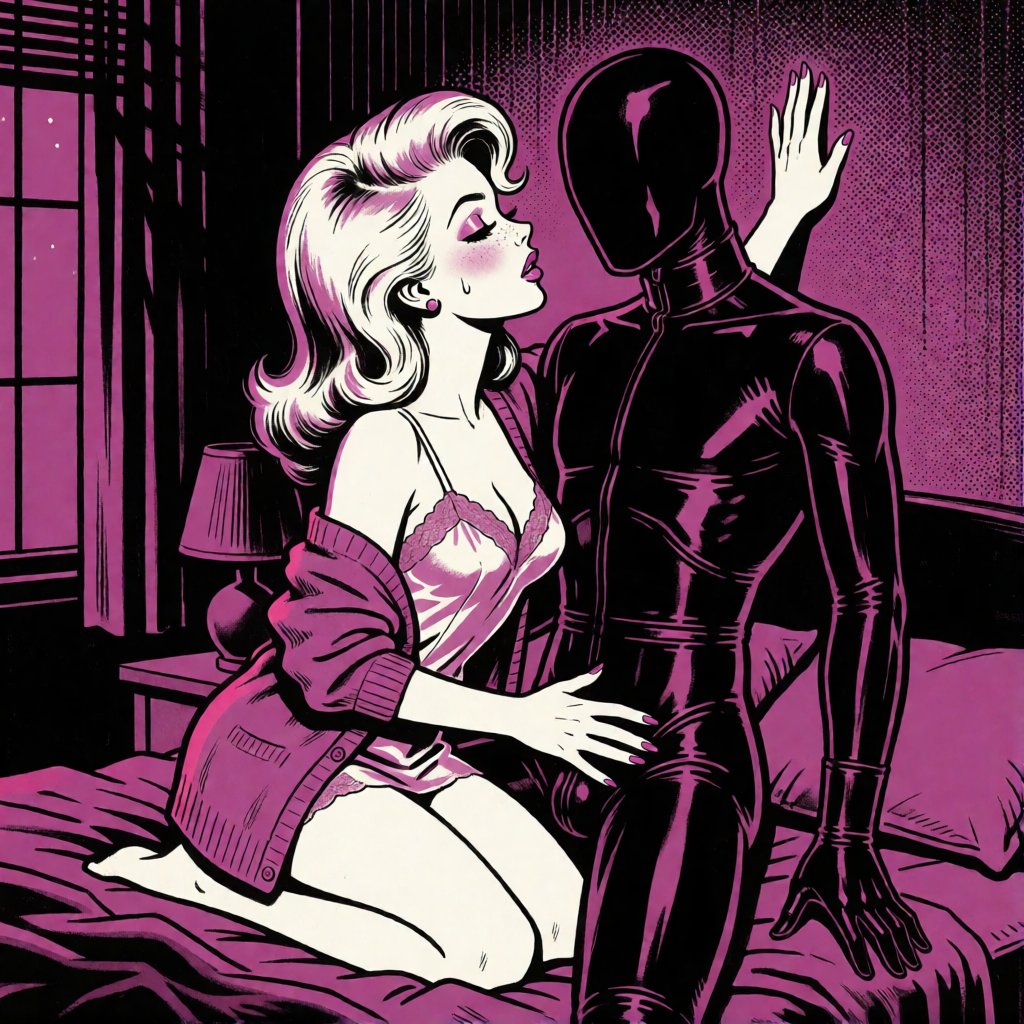
More recently, “American Horror Story: Murder House” (2011) made the “Rubber Man”, an unsettling silhouette in a latex suit, one of its most disturbing figures. Sex, haunting and terror mingle until desire itself becomes a threat.
Spectrophilia, a taste for the elusive
There are probably a thousand reasons to fantasise about ghosts. The mystery, the thrill of the forbidden, the pleasure of imagining a caress arriving from nowhere… and that odd idea that a being without a body could nonetheless drive us out of our heads.
But the fantasy has its reverse side too. The invisible lover can prove as seductive as he is unsettling, and the stories swing endlessly between pleasure, fear and loss of control. That is perhaps what makes spectrophilia so fascinating: imagination knows no limits there, for the best and for the worst.
Should we worry about it? Certainly not, if you find the idea exciting. An unusual fantasy is not a disorder in itself. The question arises mainly when an experience becomes intrusive, frightening or a source of suffering. For the rest, nothing forbids letting your imagination take a little trip to the other side of the veil.
After all, Halloween is not just the festival of monsters and frights. It is also a chance to let your imagination roam towards slightly less conventional pleasures. And after all these stories, perhaps you will never quite look at the shadows taking shape in your bedroom in the same way again.
Happy Halloween, and sleep well tonight… We wish you nightmares more torrid than terrifying.